Showing posts with label photograph. Show all posts

MEMORY TRAPS

Paris, l'Opera. 2010.
It doesn’t take much. A deserted street at dusk, with the summer sunlight lingering on the upper floors of a row of buildings and the sidewalks down below already deep in shadow, may get some old movie in our heads rolling again. Since we are ordinarily better at forgetting than remembering, it is often a mystery why some such sight has stamped itself on our memory, when countless others that ought to have far greater meaning can hardly be said to exist for us anymore. It makes me suspect that a richer and less predictable account of our lives would eschew chronology and any attempt to fit a lifetime into a coherent narrative and instead be made up of a series of fragments, spur-of-the-moment reminiscences occasioned by whatever gets our imagination working. 
 - Memory Traps, Charles Simic.  NYRB Blog, November 2012.

Paris is, and will likely forever be, my memory trap.

I think it was that way before I had even been there the first time. But it was our second time, although our first together, which hangs in my mind most often these days.

After stashing our bags at the hostel mid-morning, we snuck out and wound our way through the tightly cobbled lanes of the Marais. The air was crisp, with a cool blueness settling over the rooflines. I can't seem to remember anyone else being out. In my mind, the streets were impossibly ours.

Each with a white-specked brioche tucked into a brown paper bags at a quiet boulangerie, we found a place to sit by the canal. The cobbles were warm, and the roughness didn't bother us. Our teenage knees and travel-worn legs dangled. We couldn't help ourselves but to grin.

We were here.

Thanks to the Paris Travel Guide over at A Minute Away from Snowing for bringing it all flooding back.

PRINCESS OF WALES CONSERVATORY


India Hobson, via The Garden Edit
It all comes back. Even the dampness underfoot; even that brings it back. I was in Kew Gardens when I first realised how much everything yearns to grow.  I was just twelve, quietly sure-footed in the world. Afterwards we went back to the apartment, and it was raining lightly, and I stood in the bathtub with the white curtain pulled around, ran a shower, and shaved my armpits for the first time.

MAN CARRYING THING

 
 The poem must resist intelligence
Almost successfully. Illustration:

A brune figure in winter evening resists
Identity. The thing he carries resists

The most neccessitous sense. Accept them, then,
As secondary (parts not quite percieved

Of the obvious whole, uncertain particles
Of the certain solid, the primary free from doubt

Things floating like the first hundred flakes of snow
Out of a storm we must endure all night,

Out of a storm of all secondary things),
A horror of thoughts that suddenly are real.

We must endure our thoughts all night, until
The bright obvious stands motionless in cold.

- Wallace Stevens


The sonnett and the last two lines which ring true and achingly clear: sometimes you can't deny the power of structure to carry forth meaning (be it in poem, or architecture). 


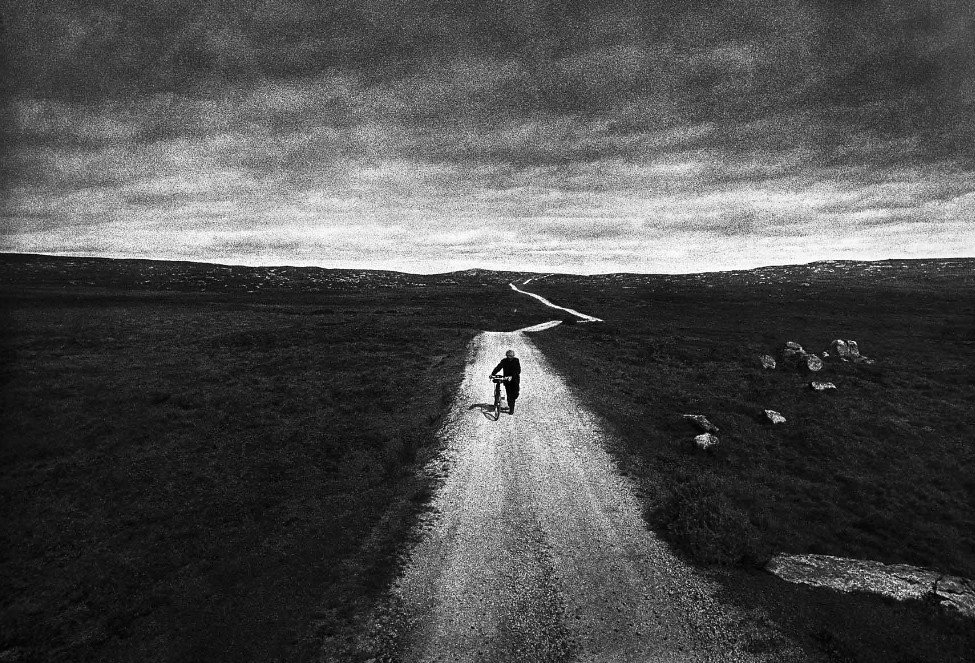
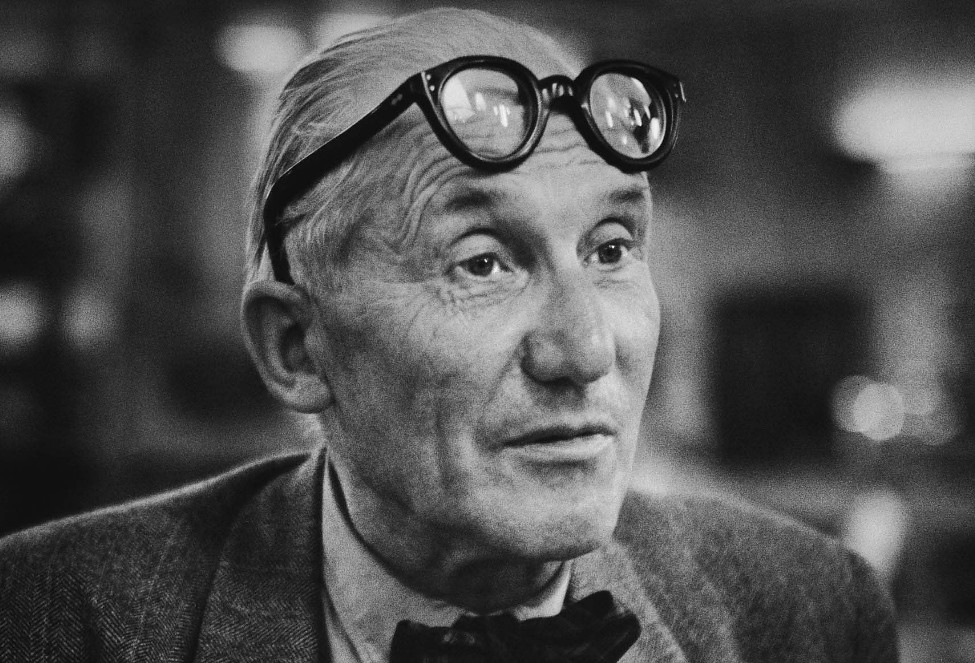
 Rene Groebli's photography (including Le Corbusier)


HOCKNEY

It had slipped my mind just how great - and, typically of things forgotten, useful for my thesis - David Hockney's early forays into the photographic world were (see above). That is, until I read this article on his latest foray, using multiple digital cameras in generate a gridded image which becomes a 'moving collage', in Technology review. Not only is the article inspiring, situating this new practice in relation to Hockey's broader oeuvre and in relation to historical constructs of 'perspective', but the resultant images are also stunning. As Hockney points out in the interview, "Don't we need people who can see things from different points of view?"

A still from the 18-screen video May 12th 2011 Rudston to Kilham Road 5 PM. Credit: ©David Hockney

PHENOMENA OF PARTIAL ILLUSION

 Phenomena of Partial Illusion
Nuveando & Nuveado
snow, fog, and salt
Lightjet Prints
134" x 7.5" & 160" x 7.5"

Katherine Bash

Speaking also of Illusions Partial or (im)-partial, Guy Horton's column The Indicator over at ArchDaily has recently featured two incredibly real articles on The Next Architecture (1 & 2). He is not afraid to delve into the difficult questions of - what value does the greater public place on architecture? How can architecture be sustained as a profession when the majority of those who practice in its field cannot afford to purchase in the field? What role can the architect play before the building enters the picture?
Pressing, pertinent, and powerful.

STUDIO CONSTRUCTS

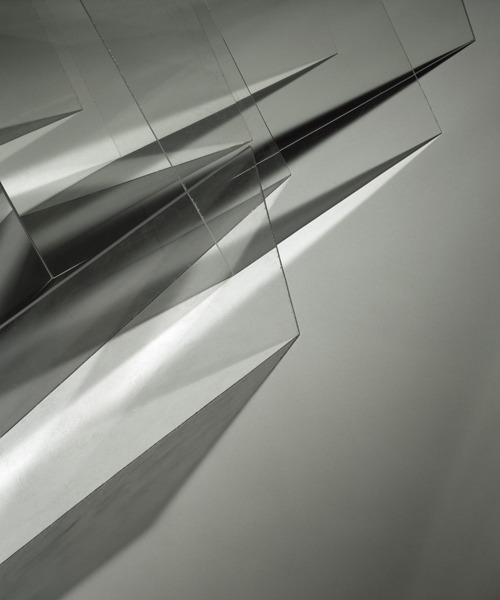
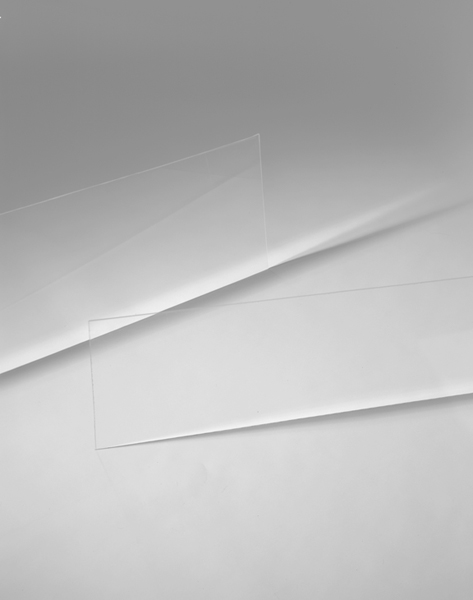
Studio Construct 15, 2007, Archival pigment print, 43.75x53.75 in
Studio Construct 8, 2007, Archival pigment print, 43.75x53.75 in


Studio Construct 17, 2007

"The process of capturing an image through a camera lens requires “an object.” This body of work addresses the representational value of that object. By photographing a transparent plane, and its shadow, familiar association with life experience is eliminated. The result is a “concrete photographic” abstract image." - Barbara Kasten


Regarding her recent solo exhibition, Abstracting…Light, held at the wonderful Almine rech Gallery in France in May-June 2010, Karsten wrote that:
The occurrence of light hitting a plane is distinctive from the recording of the same light thru the lens of a camera. A unique vision occurs through the optical prism that can be captured and ultimately printed, yet cannot be seen by the naked eye. As I directed light on various parts of transparent planes and studied it in the back of a view camera, multicolored abrasions activating the surface appeared. The scratches become a color field of drawing over a normally invisible sheet of plastic. The perception of a ‘thing’, a recordable reality of representation, is basic to the photographic process. In the series “Incidence”, the rendering of light becomes abstract interpretation of surface and form. However, I do not think of the photograph’s construction in terms of abstraction but as an event. Many abstract notions are conjured up as we view this unique recording of materiality. The synthesis of abstract form and our imagination presents a means of seeing the process of lighting. This phenomenon is the subject of my new work and exhibit ‘abstracting…light’.

Barbara Kasten's Construct's are currently on show at London's Carl Freedman Gallery alongside the work of Alexanda Leykauf and at the Cornell Fine Arts Museum in The Edge of Vision Exhibition. The Studio Constructs are perhaps her most muted works - concerned more with the transparency and fleeting physicality of the space as compared with the colour of her earlier work. This depicts a clear turning point for Karsten, from the Moholy-Nagy/Bauhaus influence towards the use of light a la James Turrell. Other artists using similar methods of constructed environments and photography include Eileen Quinlan (whose work I also adore) and Sara VanderBeek

OUT OF PLACE


When colour insists, things get magic.

PLACE AS A PAUSE

Untitled, Untitled and Untitled, from the "Place as a Pause" series, by Marika Asatiani.


'Place as a Pause' reminds me of a book I stumbled across on google books the other day: 'The Small Space of a Pause: Susan Howe's Poetry and the Spaces Between.' I'm hoping to get around to reading the majority of the work at some point. The author, Elizabeth Joyce, unwraps the 'space' of the poetry in such a lucid manner. The poem she has included on the opening page of her introduction is Untitled, 1976, and was previously unpublished. I am at odds as to why she has removed the dashes characteristic of Howe's work (and, for those who are familiar, extremely resonant of Emily Dickinson's punctuation). 


The small space
Of a pause

A haze
Blink into aching lost
Only words remain
If the print is available
The green of a city
A tumble of omens
In a western direction
Narrowing from side to side
Space as emptiness...

Is her theme
The whole page
Not just one part
Positive and negative space
Where?
Or sailed away
In the small space
Of endless possibility


I am also enjoying one of Elisabeth W. Joyce's other works - Cultural Critique and Abstraction: Marianne Moore and the Avant-GardeMore work by Marika after the break.

WE DISAPPEARED

Am Meer/Sea scapes.

I feel a strange desire to turn these images upside down, as if I was lying on the beach with looking up at the sky, then tilting my head back so far as to see the deep blue proposal of the horizon, and further round, the sea stretching out beyond.
To disappear myself into the scape.

Beautiful work by Thomas Wrede.

INTERROGATIONS

Three works from the series -Former NKVD - MVD - MGB - KGB Buildings - by Indre Sepytyte.
via The Exposure Project
Related Posts Plugin for WordPress, Blogger...