Showing posts with label writing. Show all posts

MARGARET DRABBLE


Sometimes, in the evenings, I find it hard not to get lost in The Paris Review - and even harder to find my way back out of the Interviews. There's something about the rich reality of these characters, many of whom have spent years envisaging other characters, which is just so affirming
Margaret Drabble
(with impeccable cashmere and bentwood)
 1976 

This evening, I have been lounging about with Margaret Drabble. I can't say that I've ever read one of her novels - although I have quickly added some of her classics to my reading list. Towards the end of the interview, she refers to Freud a few times. She's grappling with events, with how the passing of time relates to who you are, and to where you are. 

On surprises and familiarities (and a beautiful understanding of mortality):

There's an essay by Freud in which he discusses the uncanny feeling of being both familiar with and utterly surprised by something. I think this is one of the most distressing, but important feelings in life. The feeling that I knew this all along, but I never knew it before. Freud would argue we feel this about sex. The first time we find out what it actually is, we think “how absolutely astonishing and impossible,” but at the same time we know we knew.
I'm sure death feels a bit like that. In fact I've often had a dream in which I am just about to die and my last words are, “Oh, that was what it was like. I did know really, but now I know for real.” And then I wake up.

And on coincidence:
Freud takes a harsher view. His view is that they are coincidences and the idea that our need to see them as not being so, like our need to avoid that death really is death, contorts the whole of human life: that the whole of human culture is distorted by our desperate need to avoid the truth.
I'm perpetually tossed between these two interpretations of life. It is a fact that if you have faith of a certain sort, then certain things will happen for you or for those that you love. But this is only in a way like watering a plant. One of the images I like best is the plant in The Waterfall that Jane keeps on watering long after she thinks that it's dead. And then it begins to grow again.


L'AMANT - THINKING ABOUT DURAS


"Writing comes like the wind. It’s naked, it’s made of ink, it’s the thing written, and it passes like nothing else passes in life, nothing more, except life itself.”
 - Marguerite Duras, Writing, the final line.


A beautiful  review touching on aspects of solitude in the creation of art on TheLitPub here

HUXTABLE

Huxtable never let her readers, or anyone else who would listen, forget that architecture is not like the other arts. Paintings or dance performances you choose to see or not see, but architecture envelops us all. Everyone sees and experiences it. Huxtable insisted both that architecture is an art and that it is an art that everybody deserves to enjoy precisely because it constitutes the life of our inhabited places.

CLOG: DATA SPACE

Over two billion people across the world use the Internet regularly.
Every second, 2.8 million emails are sent, 30,000 phrases are Googled, and 600 updates are tweeted.
While being absorbed into this virtual world, most rarely consider the physical ramifications of this data. All over the world, data centers are becoming integral components of our twenty-first century infrastructure. These facilities can range from small portable modules to massive warehouses full of servers, from sleek new constructions to the reuse of existing infrastructures. 
CLOG : DATA SPACE examines with the significance of this bridge between the virtual and the physical. CLOG explores how this new typology affects the discourse of architecture and the shaping of our built environment. 
DATA SPACE includes articles on data centres, clouds, informatics, and the evolution of data storage. Also included is an article entitled “Data Case,” by Shannon of Words in Space. "Data Case" explores the material exoskeletons and physics container forms of data.

HANDS ON


Thoughts a Year on from the Supreme Court Opening
- 30 June, 2011


It is not easy to avoid hands when you design a building. A little over a year since the opening of the Supreme Court and the adjacent newly-refurbished Old High Court in Wellington and this much is clear. Step inside the Supreme Court and there in front of you, all over the copper-clad shell of the court room, are handprints. Hundreds of them. Smudged, smeared, but definitely handprints. Curiously though, if you step inside the newly-refurbished Old High Court, a building with 120 years of use, you will struggle to find a mere fingerprint.


From the outside, there is little astonishing about the Old High Court building. Where it once would have boasted harbour frontage, its vista today is crowded out by the high rises of the 1980s which make a mockery of its classical arches and hoods in the name of post-modernism. Amidst this sea of new buildings, it is difficult to spot the relatively modest Old High Court. Instead of opening out to the lively, pedestrian Lambton Quay, the entrance is on the less-used Stout Street: less used, because Stout Street happens to be notorious for its wind funnelling functions – a notoriety difficult to earn in the typically blustery capital.


Despite today’s appearances, in 1881, when the High Court was first opened for a service to justice that would last over a century, the classical masonry building would have been a beautiful rarity. Due to flexibility in earthquakes, the majority of building work being undertaken in Wellington at the time was in timber. In fact, the High Court was the first major masonry building commissioned by the New Zealand Government. Architect P.F.M Burrows referenced a highly academic classical style, imbuing the building with dignified proportions, hooded windows and Corinthian pilasters. With its T-shaped plan and hand-sculpted keystones, the High Court brought an exotic taste of the great Italian architect Antonio Palladio to Wellington.


Yet it is the inside, the curved double stairs leading to the public gallery, the detailed carved timber frieze and the broad judge’s bench which give the building its real value. These dark timber rooms were touched by the hands of judges and defendants, nearly non-stop at times, for over a hundred years.


More after break...

TEOTIHUACAN

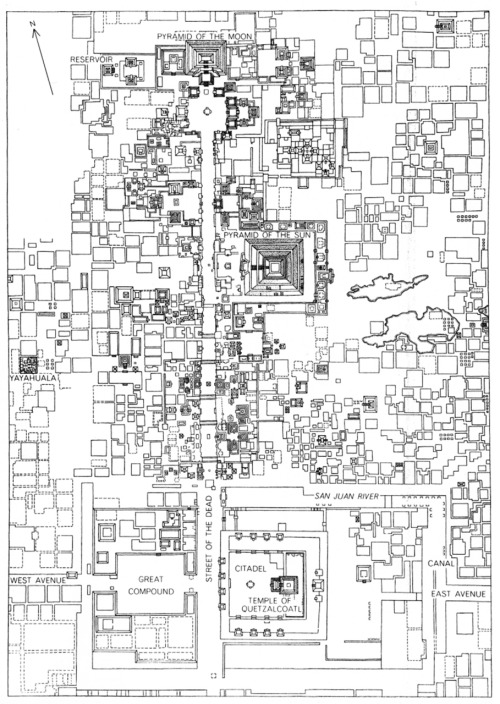
The pyramids at Teotihuacán.

 Month by month, I circled in to frame the story in theoretical terms.  And that was only the beginning. 

A novel is made of details.  Every character, on every page, has to be immersed in a perfectly visualized scene: using transportation, cooking, listening to radio programs, speaking in the particular jargon of an era.  Wearing clothes.  (Unless they aren’t, but that can’t last long.)  Each detail has to be historically exact, and in this case “the era” involved dozens of different locations in two countries, crossing nearly thirty years. 

I traveled to all the settings, on both sides of the border: Washington, D.C., Asheville, North Carolina, the Blue Ridge Parkway, on this side.  On the other, I hiked through Mexican coastal jungles, hung out in villages, went to see a brujo, visited Mexico City’s archaeological and art museums, the preserved homes of Rivera and Kahlo and the Trotskys, and their personal archives.  I climbed the pyramids at Teotihuacán.  I’ve spent a lot of time in Mexico over the past thirty years, living near the border in Arizona for most of that time, so I drew on the past too, digging out old notebooks from assignments in the Yucatan and elsewhere.  I only set scenes in places where I’ve been myself.  When I create a world for the reader, I want to do it right, using all my senses.  

That was the fun part, the “writer’s life” they show you in the movies.  Here’s what they don’t show:  the writer sitting in a chair in her study, glasses on her nose, coffee cup in hand, reading.  For years and years.  Biographies, court transcripts, political analyses from every angle, catalogues of women’s clothing from the ‘30’s and 40’s, recipe books, you name it.  Everything ever written by or about Trotsky, Diego Rivera, Frida Kahlo, J. Edgar Hoover, Franklin D. Roosevelt, I tried to lay eyes on.  I read literally thousands of newspaper and magazine articles documenting everyday life in the U.S. during World War II, and everything leading up to the post-war political freeze-up.  Autobiographies of blacklisted artists.  The internet was useful, many newspapers now have electronic archives, but mostly it served to lead me toward better things that are not online.  I had to get my nose into a lot of dusty places.  I pored over old letters and photo collections.  I visited an old-car museum.  This is a good example of the importance of primary sources: “Googling” a 1930’s Roadster won’t tell you how it feels to shift its gears, or that the windshield wiper is hand-operated by a lever over your head.  Who would have thought?  I loved the surprises.  I learned that contrary to popular belief, the continental U.S. was attacked during WWII.  The New York Times ran photos of the aftermath.  The Japanese sent a submarine up the Columbia River and deployed a floatplane bomber, with the goal of setting the Oregon forests on fire and creating panic in the land.  But the plan was rained out.  History hinges on things like this, events that get forgotten – this is the soul of the story I wanted to tell.  It was thrilling to immerse myself so deeply in the era.  I dreamt of cooking breakfast for Trotsky, and became a curiosity for elderly men at dinner parties who quizzed me about arcane World War II trivia.  The stacks of research materials grew tall in my office, like a forest of wobbly trees.  I’ve cleared it all out now, making way for the next.

- Barbara Kingsolver, on writing The Lacuna.


ABSTRACT

Provisional Thesis Abstract, July 2011

An Ethics of Dialogue


        This thesis explores the production of, legitimization of and engagement with the built environment of Wellington City. It is primarily concerned with the nature, direction, and productivity of relationships between architects, clients, users, other constructional professionals and members of the broader public, and with the implications of these relations for the practice of architecture and modes of design. The thesis steps off from a analysis of the exploding number of 'Architecture Centres' across Europe, seeking not only new engagements between individuals, but new engagements with the processes and practices of the built environment.

       Embedded in much present-day architectural thinking is a reliance on the definitional terms 'inside' and 'outside'. These terms seek to exclude any person, concept or object which might bring processes of the built environment as we know them into question. This exclusion and self-definition is echoed in practice and in the space of the city.


Engaging an alternative Levinian 'ethics of dialogue' as a driving philosophy, the thesis investigates the voices of three individuals (Bruce Robbins, literary critic; Jonathan Hill, critical architect; and Sarah Whiting, proponent of the post-critical pragmatists) who conceptualise the inside and outside in different ways, from notions of the homely and the homesick, to the sensual and the institutional, and the fashionable and the autonomous. The thesis utilises drawing as a tool to spatialise these voices and to map dialogues between individuals and sites.

        This investigation forms the foundation for the the built proposition of the thesis. The 'Doorway to the Built Environment' is a committed public building sited on and under Post Office Square which acts as a non-prescriptive space for debates, exhibitions and investigations concerning the built environment to occur. Within the context of the thesis, the building is proposed as a mode of questioning, rather than as a solution. The boundary between inside and outside is transgressed by informal space, by the voices of the usually unheard, by the shadows of the existing city. It invites all, providing a public democratic platform in which the built environment becomes collective rather than individuated in production, legitimisation and engagement.  

TODAY

Jonathan Safran Foer - Tree of Codes.

Other things I've found today: this great greek website, with a particularly well written and well linked article on Iain Borden; this article on the Art of Writing at (ironically?) the Financial Times, which still has that terrible peachy colour scheme of dentist's waiting rooms.


CLIP/STAMP/FOLD

THE RADICAL ARCHITECTURE OF LITTLE MAGAZINES 196X–197X
via clip/stamp/fold

written in light

bodies of writings - thinking about the bi-stable image

In the reader's eye and mind, writing encounters the body of the book. Take the pace of the footsteps, the phenomenological, and you may end up in the body of the house itself. When there, hold the book up to the light. Beside the writer's desk, writing is a prosthetic presence. What happens if you move along the wall? The writing, too, is restless. The line is enfleshed. When there is an expectation of your abilities, all writing is hybrid. All writing is you, embodying your body, the body of knowledge, and itself into a bi-stable image.

automatic drawings by the human hand


A collaborative project between the Department of Visual Art and the Department of ArtiFacial Expression at the IAAA has produced a series of Digital Muscle Control Drawings, where the gestures of a human who holds a piece of paper in one hand and a pen in the other are controlled, or automated, by a computer. What interests me is the relationship between the apparent randomness of each image, and their similarity to one another. In effect, each image can be broken down to three simple human gestures - the linear zigzag, the circular motion, and the a-b scrawl.
Related Posts Plugin for WordPress, Blogger...